
Cigarette addiction: understanding it and breaking free

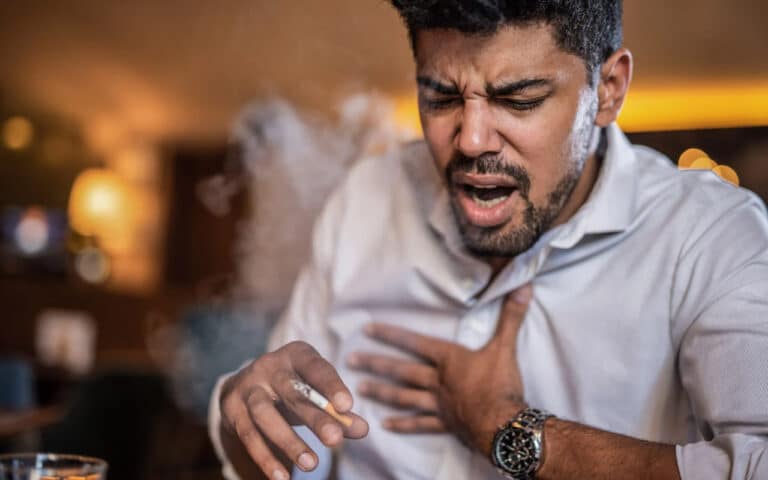
Cigarette addiction comes from the action of nicotine on the brain, combined with habits deeply rooted in a smoker’s daily life. In 2025, the World Health Organization (WHO) reported that 1 in 5 adults worldwide are still addicted to tobacco [1]. This article explains how this addiction works, its physical and psychological signs, the point at which it takes hold, and the methods that help people stop smoking.

Key takeaways

  • Nicotine reaches the brain in under 10 seconds after inhalation and activates the reward circuit, which is why cigarette addiction sets in so quickly.
  • Three dimensions coexist in the same smoker: physical dependence (nicotine cravings), psychological (managing emotions) and behavioural (daily rituals).
  • There is no universal threshold: some people become addicted after just a few cigarettes, depending on their sensitivity to nicotine and the age at which they started.
  • Physical withdrawal eases within 2 to 4 weeks of stopping, but psychological and behavioural dependence can last for several months.
  • Support tailored to the smoker’s profile (nicotine replacement, complementary methods, personalised follow-up) improves the chances of quitting for good.

Why nicotine makes tobacco addictive

Nicotine is the substance responsible for cigarette addiction. Inhaled through tobacco smoke, it reaches the brain within seconds and binds to nicotinic receptors, triggering a release of dopamine in the reward circuit [2].

This reaction produces an immediate feeling of well-being. The brain then records a reward signal:

  • Inhalation: nicotine passes from the lungs into the blood, then to the brain in under 10 seconds.
  • Receptor activation: nicotinic receptors stimulate the release of dopamine.
  • Reinforcement: the pleasure felt drives the smoker to repeat the gesture, cigarette after cigarette.
  • Tolerance: the brain develops new nicotinic receptors, which increases the need for nicotine to get the same effect.

The speed of this effect sets smoked tobacco apart from other nicotine products. The faster the substance reaches the brain, the stronger the reinforcement and the quicker the addiction takes hold.

The different types of cigarette addiction

Tobacco addiction is not just a physical need for nicotine. It combines three dimensions that reinforce one another and make quitting difficult.

Physical dependence: when the body craves nicotine

The body gets used to receiving nicotine at regular intervals. Without it, the smoker experiences withdrawal, which shows up as nervousness, difficulty concentrating, sleep problems or irritability. These symptoms appear a few hours after the last cigarette.

Psychological dependence: emotions and the urge to smoke

The cigarette becomes an emotional refuge. The smoker associates it with coping with stress, boredom, anger or anxiety. Smoking brings temporary relief, and this association grows stronger over the years. The urge to smoke surfaces with every strong emotion, positive or negative.

Behavioural dependence: everyday automatic habits

Some gestures become reflexes tied to specific situations: a cigarette with the morning coffee, during a break at work, after a meal, behind the wheel or on the phone. These automatic habits act as triggers. The smoker lights up without thinking, out of habit rather than conscious need.

The sensory and identity dimensions

Two lesser-known aspects complete the picture. The sensory dimension relates to attachment to the taste, the smell and the gesture of smoking. The identity dimension affects people who have built part of their social image around cigarettes: smoking is part of who they are and of how they relate to others.

At what point do you become addicted to cigarettes?

There is no universal level of consumption beyond which everyone becomes addicted. Sensitivity to nicotine varies from person to person, depending on the age at which smoking started, how often the smoke is inhaled and genetic factors.

The Fagerström test remains the reference tool for assessing the level of dependence. It is based on a few simple questions. Among the criteria, the time between waking up and the first cigarette is a telling indicator:

  • Under 5 minutes: strong dependence (11% of adult daily smokers in France) [3].
  • 6 to 30 minutes: moderate to strong dependence (26% of daily smokers) [3].
  • More than 60 minutes: low dependence.

Data from the Haute Autorité de santé (HAS, the French National Authority for Health) confirm this breakdown: in France, 18% of adults show signs of strong dependence and 31% moderate dependence. Among young people aged 15 to 25, these figures reach 14% and 33% respectively [3].

Some people develop an addiction after just a few weeks of regular smoking. Because there is no fixed threshold, every smoker needs to stay alert, including occasional smokers.

What are the signs of tobacco addiction?

The signs of cigarette addiction fall into physical and psychological categories. Recognising them is the first step towards quitting.

Physical signs

  • Needing to smoke as soon as you wake up, before doing anything else.
  • Withdrawal felt after a few hours: tension, restlessness, headaches.
  • Difficulty concentrating without nicotine.
  • A gradual increase in the number of cigarettes smoked per day.

Psychological and behavioural signs

  • An irresistible urge to smoke in certain situations (stress, parties, boredom).
  • Being unable to cut down or stop despite wanting to.
  • Disproportionate irritability when trying to quit.
  • Starting again quickly after every attempt to quit.
  • Carrying on smoking despite knowing the health consequences.

If you recognise three or four of these signs, your level of dependence calls for appropriate support. You can start by identifying the practical steps to stop smoking.

Which situations keep the urge to smoke alive?

Behavioural dependence feeds on everyday triggers: the morning coffee, a break at work, the end of a meal, an evening with alcohol, a moment alone, being around other smokers or even the smell of smoke.

These situations reawaken the urge to smoke through association. The brain has recorded a link between the situation and the cigarette, and this conditioning lasts long after you stop smoking.

Three steps help break these automatic habits:

  • Identify your personal triggers (keep a notebook for a few days).
  • Anticipate high-risk situations and prepare an alternative (a glass of water, a walk, breathing exercises).
  • Replace the gesture gradually with a new habit.

E-cigarettes can act as a stepping stone for some people, but they do not remove nicotine dependence. They change how nicotine is used without eliminating the need for it.

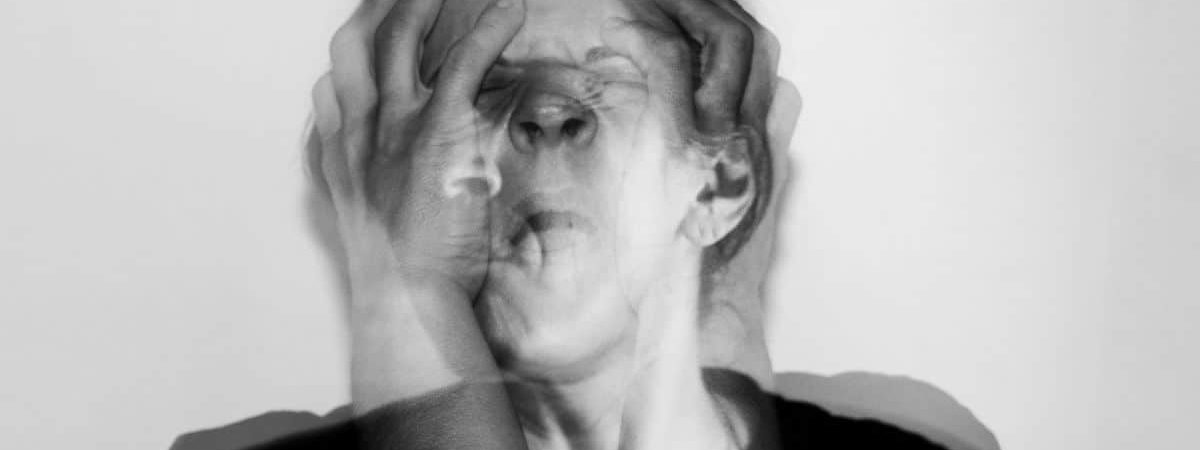
Photo en noir et blanc d'une femme stressée à cause de la cigarette

Health risks linked to cigarette addiction

Addiction prolongs exposure to tobacco smoke and its 4,000 toxic substances, around sixty of which are carcinogenic [4]. The health consequences worsen with the duration and intensity of smoking:

  • Cardiovascular risks: heart attack, stroke, peripheral arterial disease.
  • Respiratory risks: chronic obstructive pulmonary disease (COPD), emphysema, lung infections.
  • Cancers: lung, throat, bladder, pancreas.
  • Ear, nose and throat effects: worsening of ear infections, sinusitis and respiratory tract infections.

Smoking causes 75,000 deaths a year in France [4]. Cigarette addiction remains the main obstacle to quitting, and therefore the main factor that keeps people exposed to these risks.

How long does nicotine withdrawal last?

The length of withdrawal varies according to the level of dependence, the smoker’s habits and the support in place.

  • First 72 hours: physical withdrawal peaks. Nicotine is eliminated from the body. Irritability, strong cravings, sleep problems.
  • 2 to 4 weeks: physical withdrawal eases noticeably. Nicotinic receptors begin to regulate themselves.
  • 1 to 3 months: psychological and behavioural dependence is still present. Trigger situations still bring on the urge to smoke.
  • Beyond 3 months: automatic habits gradually fade. The risk of relapse decreases but does not disappear completely.

Physical withdrawal, often the most feared part, is actually the shortest. Psychological dependence and behavioural habits take longer to work on. The smoker’s motivation and personalised support make all the difference in staying smoke-free over time.

Which methods can help you break free from cigarette addiction?

Several methods exist to support stopping smoking. The choice depends on the smoker’s profile, level of dependence and preferences.

Nicotine replacement products

Nicotine replacement products (patches, gum, lozenges, sprays) provide nicotine without the toxic substances found in smoke. They reduce physical withdrawal and make the transition easier. In France, the HAS recommends these stop-smoking aids as a first-line option.

Complementary methods

Other approaches support quitting without medication: hypnosis, acupuncture, sophrology, laser auricular reflexology. These methods mainly address psychological and behavioural dependence, alongside or as an alternative to nicotine replacement. To find out how a stop-smoking laser session works, read our dedicated guide.

Cutting down gradually or stopping completely: which strategy?

For most smokers, stopping abruptly works better than cutting down gradually. However, a supervised reduction may suit highly dependent people who dread withdrawal. The most important thing is to set a quit date and stick to it, with appropriate follow-up.

At Reset Laser, laser auricular reflexology uses a soft low-intensity laser on reflex points of the ear, with the aim of easing cravings from the first session. What sets this non-medical approach apart: 12 months of personalised support, with a free support session if you relapse. A satisfaction rating of 4.9/5 on Google reflects how much our clients value this support. Book an appointment at one of our centres to take stock of your dependence.

Young people, e-cigarettes and new habits

Nicotine addiction no longer comes only from traditional cigarettes. E-cigarettes and disposable vapes, known as puffs (banned in France since 2025), expose young people to nicotine at an ever earlier age.

Data from the Agence régionale de santé (ARS, the regional health agency) for Île-de-France illustrate this trend [5]:

  • 46% of upper secondary pupils had tried e-cigarettes in 2024 (compared with 35.1% in 2015)
  • Daily vaping rose from 2.8% to 6.8% over the same period
  • 39.4% of upper secondary pupils and 16.6% of lower secondary pupils had tried puffs before they were banned

Whatever the product, nicotine remains at the heart of the addiction mechanism. A teenager who starts vaping faces the same risk of addiction as someone who smokes traditional cigarettes.

Take action with Reset Laser

Stopping smoking is a journey that takes preparation and support. If you are still hesitating, the next step is to talk to your doctor or to find out how a stop-smoking laser session works, so you can judge whether this approach suits your profile as a smoker. At Reset Laser, a session lasts about an hour and comes with 12 months of support: a free support session is offered if you relapse within the year.

In summary

Cigarette addiction combines a physical need for nicotine, a psychological refuge and firmly rooted behavioural habits. Understanding these three dimensions helps you choose the right way to stop and gives you the best chance of quitting for good.

The first step is to assess your level of dependence honestly, for example with the Fagerström test, and then to surround yourself with the right support. To discover how to stop smoking with a gentle, medication-free approach, explore the resources available and get support.

FAQ on cigarette addiction

There is no precise number. Some people develop an addiction after a few weeks of regular smoking, sometimes with only a few cigarettes a day. Individual sensitivity to nicotine, the age at which smoking started and how often the smoke is inhaled all play a decisive role.

The Fagerström test assesses your level of dependence in a few questions. The two most telling indicators are the time between waking up and your first cigarette, and the number of cigarettes you smoke per day. If you smoke within 30 minutes of waking up, your dependence is probably moderate to strong.

Needing to smoke as soon as you wake up, before doing anything else, is considered the most telling sign of strong nicotine dependence. This criterion is central to the Fagerström test and shows that the body is craving the substance as soon as the night is over.

Physical nicotine withdrawal is most intense during the first 72 hours and eases noticeably within 2 to 4 weeks. Psychological dependence and habit-related cravings can last for several months, but their intensity gradually decreases with the right support.

Nicotine replacement products (patches, gum, lozenges) increase the chances of quitting successfully by 1.5 to 2 times compared with stopping without help [2]. They reduce physical withdrawal by providing nicotine without the toxic substances in smoke. They work even better when combined with personalised follow-up.

Tobacco smoke irritates the mucous membranes of the airways and encourages ear, nose and throat infections. In children exposed to second-hand smoke, the risk of recurrent ear infections is significantly higher. In adult smokers, sinusitis and ear, nose and throat infections are more frequent and take longer to clear up.

Medical sources

[1] WHO, “WHO tobacco trends report: 1 in 5 adults still addicted to tobacco”, 2025. https://www.who.int/fr/news/item/06-10-2025-who-tobacco-trends-report-1-in-5-adults-still-addicted-to-tobacco

[2] INSERM, “Effets de la nicotine sur la neurotransmission cérébrale” (Effects of nicotine on brain neurotransmission), 2024.
https://ipubli.inserm.fr/bitstream/handle/10608/149/?sequence=10

[3] Haute Autorité de santé (HAS), “Dépistage du tabagisme et prévention des maladies liées au tabac” (Screening for smoking and preventing tobacco-related diseases), guidelines, 2016. https://www.has-sante.fr/upload/docs/application/pdf/2016-06/referentiel_tabac.pdf

[4] Santé publique France / Tabac Info Service, “Quelles sont les conséquences du tabagisme sur la santé ?” (What are the health consequences of smoking?), 2024.
https://www.santepubliquefrance.fr/tabac/quelles-sont-les-consequences-du-tabagisme-sur-la-sante

[5] Agence régionale de santé (ARS) Île-de-France, “Journée mondiale sans tabac 2026” (World No Tobacco Day 2026), 2026. https://www.iledefrance.ars.sante.fr/journee-mondiale-sans-tabac-2026-baisse-du-tabagisme-en-france-mais-hausse-et-alerte-sur-le

Why choose RESET Laser Institute

Our commitments

Trained practitioners

Our practitioners are trained to support you every step of the way.

Satisfaction

An average rating of 4.9/5 on Google across the whole network.

Non-invasive

Non-invasive, with no needles or medication: our method is open to most people.

Gentle

A gentle approach, with no needles or medication, designed to support your decision to quit.

Personalised support

Because everyone is different, we offer you personalised support.

Free session if you relapse (12 months)

For 12 months, a free support session is offered if you relapse.

Our clients recommend Reset Laser Institute

Posted on Google Google
melodie antonaci
December 10, 2023
Google star 1Google star 2Google star 3Google star 4Google star 5Trustindex verifies that the original source of the review is Google.
Parfait, 30 ans de tabac et 3 semaines que plus une cigarette 💪🏻
Posted on Google Google
Axel Roffi
February 24, 2022
Google star 1Google star 2Google star 3Google star 4Google star 5Trustindex verifies that the original source of the review is Google.
7 jours après la thérapie, aucun sentiment de manque physique. Excellente thérapie que je recommande. Dialogue constructif avec le thérapeute qui m'a très bien expliqué les processus. Très disponible et puis il y a un suivi après la thérapie qui est un gros plus. Je recommande à tous ceux qui ont pris la décision d'arrêter de fumer et qui ont besoin d'aide dans cette démarche.
Posted on Google Google
Marie-Laure Picarone
August 1, 2024
Google star 1Google star 2Google star 3Google star 4Google star 5Trustindex verifies that the original source of the review is Google.
J avoue avoir été un peu septique dans l idée d arrêter la cigarette en UNE séance de laser ... mais voilà un peu plus d un mois à ce jour et du jour au lendemain ce fut une nouvelle vie. Une libération après plus de 25 ans de consommation de tabac et plus d un paquet par jour. Il n est jamais trop tard pour arrêter.. et commencer une autre vie 😊 surtout au prix que cela coûte de nos jours .. Je recommande vivement cette technique. Un peu plus de six mois et aucune envie de reprendre ...
Posted on Google Google
caroline “Caroclo” cloetens
February 16, 2024
Google star 1Google star 2Google star 3Google star 4Google star 5Trustindex verifies that the original source of the review is Google.
C'est juste INCROYABLE. 46 années accrochée à cette maudite clope et une séance aura suffit à m'en débarrasser. Merci Bruno. Vous risquez d'être overbooker d'ici peu tellement j'en parle autour de moi
Posted on Google Google
Aaliyah Sail
April 25, 2022
Google star 1Google star 2Google star 3Google star 4Google star 5Trustindex verifies that the original source of the review is Google.
Ce qui m as attiré le + c est bien la garantie d 1 an..voilà le 23 cela fais 2 mois maintenant que j ai arrêté la cigarette et les joints( depuis28ans d addiction) 300 euro de cigarette et 300 de joint par mois.je n aurai jamais penser y arriver.. cette méthode gagne à être reconnue.. jamais je n aurai cru cela possible.. on peu même fumer a mes côtés cela ne me tente pas.. c est plutot des moment de détente que j ai associé a ma cigarette. Et comme le spécialiste m as bien dis. L envie( psychologique)ne dure qu une minute.. quand on a compris ça. Qlq conseil bien avisé.. et 1 peu de volonté. Mais je n ai pas pris 20kg com ts ceux qui ont arreter d eux meme.( ma+ grande peur c etait ca) . je ne m en suis pas prise a mon entourage et je n ai pas cauchemardé.. mon addition physique a bien disparue grâce au lazer..bravo cette méthode gagne à être reconnue je le répète. Pr ma part j ai déjà persuadé qlq amis à y allé 😉👍💪 encore merciiiii
Posted on Google Google
Sabine
April 15, 2022
Google star 1Google star 2Google star 3Google star 4Google star 5Trustindex verifies that the original source of the review is Google.
J ai fait ma séance le 5 Mars , je n ai plus aucune envie de fumer . Merci
Posted on Google Google
Hamza Lizani
October 5, 2021
Google star 1Google star 2Google star 3Google star 4Google star 5Trustindex verifies that the original source of the review is Google.
Fonctionne du tonnerre! Alcoolique depuis plus de 6ans qui buvait tout les jours jusqu'à l'ivresse, j'ai été sevrer du jour au lendemain sans aucune envie ni aucun manque (et sans aucun symptômes style tremblement, agitation, etc...). Aucun effets secondaires, c'est juste incroyable! N'hésitez pas, la mariée n'est pas trop belle 😉
Posted on Google Google
valerie lawniczak
January 24, 2024
Google star 1Google star 2Google star 3Google star 4Google star 5Trustindex verifies that the original source of the review is Google.
Agréablement surprise, aucun état de manque physique, je ne ressent aucun stress, ... très calme.. juste des envies par habitudes,par routines ... très bien reçue, bonne explications et bon conseils...mon seul regret, ne pas l avoir fait avant...
Posted on Google Google
Jennifer Bert
August 10, 2022
Google star 1Google star 2Google star 3Google star 4Google star 5Trustindex verifies that the original source of the review is Google.
Je tenais à remercier reset laser pour m'avoir aider à arrêter de fumer 26 ans que je fumais déjà essayer d'arrêter plusieurs fois sans succès mais avec reset laser c'est différent pas de manques pas d'envies on n'y pense plus comme si sa n'avait jamais exister bien sûr il faut le vouloir je peut vous assurez que c'est la solution alors à tous ceux qui veulent arrêtez foncez chez reset laser sans hésitations merci encore pour votre aide 💪💪💪💪
Posted on Google Google
Shady Nuhija
February 8, 2022
Google star 1Google star 2Google star 3Google star 4Google star 5Trustindex verifies that the original source of the review is Google.
Mon mari a arrêté de fumer depuis 1 mois grâce à cette méthode. Il a été fumeur 20 ans et a essayé plusieurs fois par d’autres moyens et n’y arrivais pas. Merci à Reset Laser pour avoir réussi à supprimer cette addiction. On les recommande à 100%!!! Et plusieurs proches ont pris exemple et vont également se lancer dans cette bonne résolution! Merci encore!
Posted on Google Google
ANNA ELLONA G
January 18, 2024
Google star 1Google star 2Google star 3Google star 4Google star 5Trustindex verifies that the original source of the review is Google.
Top! Pas repris la cigarette depuis mon rdv, je recommande
Posted on Google Google
FloFlo Flo
October 21, 2021
Google star 1Google star 2Google star 3Google star 4Google star 5Trustindex verifies that the original source of the review is Google.
Arrêt définitif depuis mon RDV du 02/09/21 et ce après plus de 30 ans d'addiction à la cigarette ! J'avais envie de stopper mais j'appréhendais puisque ma précédente tentative avait échoué (hypnose). Mais force est de constater que cela fonctionne ++++ ! Merci à vous de m'avoir retirer cette addiction et d'être devenue une non fumeuse 🙂
Posted on Google Google
Laurent Delsarte
June 22, 2023
Google star 1Google star 2Google star 3Google star 4Google star 5Trustindex verifies that the original source of the review is Google.
Je recommande ! Séance et suivi au top, plus aucune envie alors que j'étais sceptique à la base. Ce qui vous empêche d'arrêter maintenant, c'est juste la peur de prendre rendez vous et d'être libéré de ce poison. Je recommande fortement !
Posted on Google Google
G C
April 16, 2022
Google star 1Google star 2Google star 3Google star 4Google star 5Trustindex verifies that the original source of the review is Google.
Redoutablement simple et efficace. Bientôt 8 mois sans fumer et surtout sans AUCUNE difficulté! Merci
Posted on Google Google
Keltoum Amagarou
October 12, 2023
Google star 1Google star 2Google star 3Google star 4Google star 5Trustindex verifies that the original source of the review is Google.
Bonjour voilà cela fait 1 mois jour pour jour que j’ai arrêté de fumer grâce au Reset laser. Après avoir tout tenté (hypnose, chic, patch, cigarette électronique,etc…) j’ai enfin pu me libérer de cette addiction. J’étais très septique et pourtant ça fonctionne. Aucun manque ressenti, ni effets secondaires (a condition de le vouloir et surtout de respecter les conseils personnalisés qui nous sont donnés bien sûr) . Je remercie Thomas pour tout ses conseils et son professionnalisme. Je recommande a 100% Reset Laser.
Posted on Google Google
Audrey Pante
November 19, 2021
Google star 1Google star 2Google star 3Google star 4Google star 5Trustindex verifies that the original source of the review is Google.
Cela fait quelques jours que nous avons fait le traitement mon homme et moi. Nous sommes super contents du resultat on entamme encore un jour avec le sourrire pas de stress, d'angoisse ou de manque , uniquement de la fierté et bonne humeur qui nous donne de la motivation et force pour continuer demain. Mille mercis , Audrey et Kevin 🙏 Allez y ca en vaut la peine 💪💪💪💪
Posted on Google Google
Wendy Francis
December 11, 2023
Google star 1Google star 2Google star 3Google star 4Google star 5Trustindex verifies that the original source of the review is Google.
Sevrage sucre. Une vraie révélation cette méthode. Ca a toujours été le plus grand combat de ma vie. Depuis toute petite. Depuis le laser, je n ai plus mangé une seule sucrerie et c est tellement facile de ne pas en prendre ! Aucune sensation de manque et le super bonus, des kilos en moins. Merci a Reset Laser pour ce nouveau départ !
Posted on Google Google
Christophe Schouppe
September 7, 2021
Google star 1Google star 2Google star 3Google star 4Google star 5Trustindex verifies that the original source of the review is Google.
Pour ma part je suis ravis, je suis sorti du bureau sans la moindre envie de fumer et cela fait 8 jours que ça dure. Merci à reset lazer.
Posted on Google Google
Rossini Jacques
September 27, 2021
Google star 1Google star 2Google star 3Google star 4Google star 5Trustindex verifies that the original source of the review is Google.
Moi qui était un très gros fumeur .merci sa marche bonne soirée
Similar Posts