What makes cigarettes addictive: nicotine, the brain and dependence

Nicotine is the substance that makes cigarettes addictive. Reaching the brain in under ten seconds after each puff, it triggers a release of dopamine that gradually builds dependence [1]. Two thirds of people who try a cigarette go on to become daily smokers, at least for a while [2]. This article explains the neurobiological mechanisms behind tobacco addiction, the three forms of dependence and practical ways to break free.

Key takeaways

  • Nicotine is the main culprit behind cigarette addiction: it binds to nicotinic receptors in the brain and releases dopamine within seconds.
  • Tobacco dependence rests on three pillars: physical (the body’s craving), psychological (managing emotions) and behavioural (the smoker’s gestures and rituals).
  • The feeling of relaxation a cigarette gives is not a genuine calming effect, but temporary relief from nicotine withdrawal.
  • 2/3 of people who try a cigarette become daily smokers, at least for a while [2].
  • Several kinds of help exist to break free from tobacco: nicotine substitutes and varenicline, both backed by documented evidence, or personalised support through laser auricular reflexology.
smoke-cigarette

What makes cigarettes addictive: nicotine comes first

Nicotine is the substance mainly responsible for tobacco addiction. Of the thousands of components in cigarette smoke, it is the one that acts directly on the brain and creates dependence.

Tobacco, smoke and nicotine: different roles

People often confuse tobacco (the plant), smoke (the gas mixture produced by combustion) and nicotine (the addictive molecule). Here is how they differ:

  • Tobacco naturally contains nicotine, but also sugars, alkaloids and flavourings.
  • Cigarette smoke releases more than 7,000 substances during combustion, including tar, carbon monoxide and dozens of carcinogenic compounds [3].
  • Nicotine is the molecule that hooks the smoker: it does not directly cause cancer, but it creates the dependence that keeps people smoking.

Combustion plays a decisive role in how addictive cigarettes are. By burning the tobacco, it delivers nicotine extremely quickly into the bloodstream and then the brain. This speed reinforces the reward cycle.

Conventional cigarettes, e-cigarettes and nicotine pouches

The conventional cigarette remains the most addictive of all nicotine products. Combustion speeds up nicotine absorption, which amplifies the reward effect in the brain. E-cigarettes also deliver nicotine, but without combustion and with a more gradual rise.

According to a French Senate report, some nicotine pouches can contain up to 47.5 mg per pouch, which means potentially very high doses [4]. Every product carries a risk of dependence, but the principle is the same: the faster nicotine reaches the brain, the faster addiction sets in.

How nicotine acts on the smoker’s brain

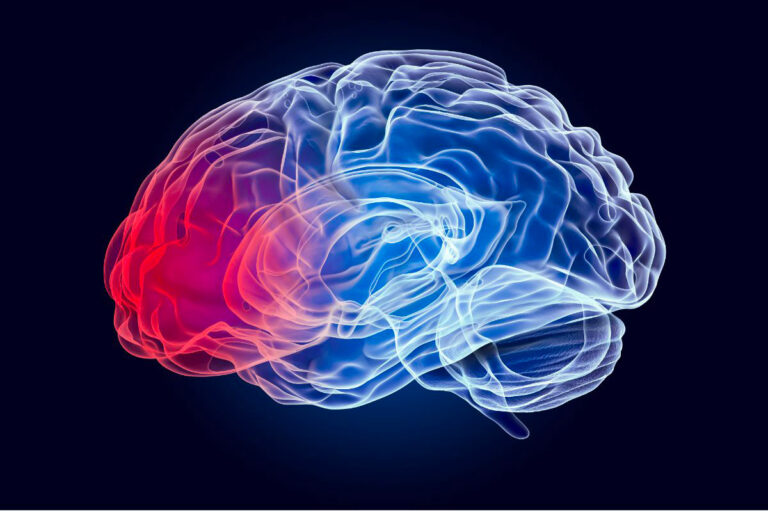
Nicotine reaches the brain in under ten seconds after the smoke is inhaled. This speed explains why every cigarette strengthens dependence a little more.

Nicotinic acetylcholine receptors

In the brain, nicotine binds to specific receptors called nicotinic acetylcholine receptors. Acetylcholine is a natural neurotransmitter involved in attention, memory and motor control. By mimicking its action, nicotine disrupts communication between neurons and activates the reward circuit.

This binding sets off a neurobiological cascade:

  1. Nicotine binds to nicotinic acetylcholine receptors in the reward circuit.
  2. The brain releases dopamine, the neurotransmitter linked to pleasure and motivation.
  3. A feeling of pleasure appears almost instantly, strengthening the link between the cigarette and the sense of well-being.
  4. Dopamine levels drop quickly, creating withdrawal and the urge to smoke again.

Why the brain keeps asking for cigarettes

Repeating this cycle changes how the brain works over the long term. The brain adapts by multiplying its nicotinic receptors, which increases the amount of nicotine needed to get the same effect. This is known as tolerance: the smoker needs to smoke more to feel the same satisfaction.

This mechanism explains why tobacco addiction sets in gradually and why stopping causes intense cravings. Used to receiving nicotine, the brain sends out distress signals when it no longer arrives.

The three forms of cigarette dependence

Tobacco addiction is not just a chemical reaction. It rests on three pillars that reinforce one another: physical dependence, psychological dependence and behavioural dependence.

Physical dependence: the body craves nicotine

Physical dependence results directly from the action of nicotine on the brain’s receptors. When nicotine levels fall between two cigarettes, the body shows signs of withdrawal:

  • Irritability and nervousness
  • Difficulty concentrating
  • Sleep problems
  • Increased appetite

These symptoms are temporary. They generally ease within two to four weeks of stopping, the time it takes for the brain to rebalance its natural production of dopamine and acetylcholine [5].

Psychological dependence: emotions and stress management

Smokers associate cigarettes with specific emotional situations: stress, boredom, socialising, a break at work. This conditioned link turns tobacco into a tool for regulating emotions.

Cigarettes do not actually reduce stress. They relieve nicotine withdrawal, which creates a false impression of relaxation. Smokers think they are calming down, when they are simply easing the tension created by withdrawal between two cigarettes.

Behavioural dependence: the smoker’s rituals and habits

Smoking is part of a set of gestures and routines rooted in daily life: lighting up with the morning coffee, on leaving the office, after a meal or in the car. These habits are deeply ingrained.

Behavioural dependence explains why some smokers still feel the urge to smoke long after the physical craving has gone. The gesture, the ritual and the social context remain powerful triggers.

These three forms of dependence feed one another. Physical craving strengthens the emotional need, which in turn drives people to repeat their habits. Understanding this triple dimension is the first step towards breaking free from tobacco for good.

Gros plan de profil de la bouche et du menton d'une personne en train de recracher de la fumée de cirgarette

Why smokers feel that smoking relaxes them

A cigarette does not provide genuine calm comparable to a relaxing activity. What smokers perceive as relaxation is actually relief from nicotine withdrawal.

The mechanism forms a loop:

  1. Nicotine levels fall between two cigarettes, creating inner tension.
  2. The smoker lights a cigarette, nicotine levels rise again and the tension disappears.
  3. The smoker feels relief and interprets it as relaxation.
  4. Nicotine levels drop again, and the tension returns.

A non-smoker in the same stressful situation does not feel this withdrawal-related tension. Cigarettes do not relax you: they simply bring the smoker back to the baseline comfort of someone who does not smoke.

At the office, after lunch or in a traffic jam, the ritual masks this reality. Recognising the mechanism helps dismantle the idea that tobacco is an ally against stress.

What makes some people more dependent than others

Not everyone exposed to tobacco develops the same level of dependence. Several factors influence how quickly and how strongly addiction takes hold.

Number of cigarettes and frequency of smoking

The more regular and heavy daily smoking is, the more firmly dependence takes root. A daily smoker exposes their brain to hundreds of nicotine peaks a day, which multiplies nicotinic receptors and strengthens the need.

Starting age: young people are especially vulnerable

Starting to smoke early multiplies the risk of dependence. The adolescent brain, still developing, is more vulnerable to the effects of nicotine. According to the World Health Organization (WHO), 40 million young people aged 13 to 15 use tobacco worldwide and 15 million use e-cigarettes [6]. In the WHO European Region, 20% of 15-year-olds report having used e-cigarettes in the past 30 days [7].

Social and emotional context, and habits

Having smokers around you, work or personal stress and repeated smoking situations all speed up the onset of dependence. Some people also have a greater genetic sensitivity to the effects of nicotine on the reward circuit.

Knowing these risk factors helps explain why quitting is harder for some smokers and makes it possible to tailor the quitting strategy to each profile.

What happens during nicotine withdrawal

Nicotine withdrawal is the period during which the body and brain adjust to the absence of nicotine. Withdrawal symptoms generally appear within the first few hours after the last cigarette.

The most common signs of withdrawal are:

  • Intense cravings to smoke, especially in usual smoking situations
  • Irritability and mood swings, linked to the drop in dopamine
  • Problems with concentration and sleep
  • Increased appetite (the brain looks for other sources of pleasure)

The good news: physical dependence on nicotine decreases sharply within 2 to 4 weeks. Cravings peak between day 2 and day 4, then gradually ease [5]. Psychological and behavioural dependence can last longer, which is why long-term support makes sense. A laser stop-smoking session aims precisely to ease this phase of physical craving.

A relapse does not mean failure. Tobacco addiction is recognised as a chronic, relapsing disease, and its consequences lessen with each attempt. Every quit attempt, even a temporary one, builds experience and increases the chances of long-term success.

Which methods help you break free from tobacco

There are several approaches to support quitting smoking. Combining them increases the chances of lasting success. For a wider overview of the options available, read our guide on how to quit smoking.

Nicotine substitutes

Nicotine substitutes (patches, gum, lozenges, inhalers) provide nicotine without the smoke and its thousands of harmful substances. They reduce physical cravings by maintaining a controlled supply of nicotine, which makes gradual withdrawal easier. In France, the use of nicotine substitutes rose by 7% in 2024-2025, according to data from the French Monitoring Centre for Drugs and Drug Addiction (OFDT, Observatoire français des drogues et des tendances addictives) [8].

Varenicline

Varenicline acts directly on nicotinic acetylcholine receptors. It reduces the urge to smoke by partially blocking the effect of nicotine on the brain. If a smoker has a cigarette while taking varenicline, the feeling of pleasure is dulled, which weakens the reinforcement of addiction. This medicine is prescribed by a doctor, usually when nicotine substitutes have not been enough.

E-cigarettes as a harm reduction approach

E-cigarettes allow nicotine to be inhaled without combustion. According to a 2023 Cochrane review, reported by the French Fédération Addiction, nicotine vaping is more effective than conventional nicotine substitutes for maintaining abstinence beyond six months [9]. UK health authorities estimate the reduction in health risks at around 95% compared with conventional cigarettes [9].

These methods are not mutually exclusive. A smoker supported by a health professional can combine nicotine substitutes with behavioural follow-up to maximise their chances of quitting.

Breaking free from tobacco with laser auricular reflexology

Understanding how addiction works also means identifying the levers for breaking free. The laser auricular reflexology offered at Reset Laser targets the physical side of dependence, during a session of about one hour with a soft low-intensity laser. It is non-medical and involves no medication or nicotine. Results vary from person to person.

The 12 months of personalised support, with a free new session in the event of a relapse, also covers the psychological and behavioural side. A Google rating of 4.9/5 reflects how much our clients value this support. Book an appointment at a centre near you.

Take action with Reset Laser

Quitting smoking is a journey that takes preparation and support. If you are still hesitating, the next step is to talk to your doctor or find out how a laser stop-smoking session works, to see whether this approach suits your smoker profile. At Reset Laser, the session lasts about one hour and comes with 12 months of support: a free new session if you relapse within the year.

In summary

What makes cigarettes addictive is above all nicotine: by acting on the brain’s nicotinic receptors and triggering the release of dopamine, it creates a self-reinforcing physical, psychological and behavioural dependence. The key to breaking free from smoking is to work on all three dimensions at once, with a suitable method and long-term support. If you are thinking about quitting, explore these practical approaches to quitting cigarettes and find the one that matches your smoker profile.

FAQ: cigarette addiction

Nicotine is the substance responsible for cigarette addiction. It reaches the brain in under ten seconds, binds to nicotinic acetylcholine receptors and triggers a release of dopamine. This mechanism creates a pleasure-withdrawal cycle that drives the smoker to light up again.

It is the nicotine in tobacco that causes dependence. Tobacco is the plant that contains it, and burning a cigarette allows very rapid absorption. The other substances in smoke (tar, carbon monoxide) are harmful to health but are not directly responsible for addiction.

Nothing comparable to genuine relaxation. Smokers feel relaxed because the cigarette relieves the nicotine withdrawal built up since the previous puff. It is a return to baseline comfort, not extra calm. A non-smoker does not feel this withdrawal-related tension.

Tobacco dependence rests on three pillars:

  • Physical: the body gets used to nicotine and demands its dose.
  • Psychological: the smoker associates cigarettes with managing stress, emotions and pleasure.
  • Behavioural: gestures, rituals and daily habits keep the urge to smoke alive.

There is no universal threshold. Some people become dependent after just a few cigarettes. According to available data, 2/3 of people who try a cigarette become daily smokers, at least for a while [2]. Starting age, frequency and the context of smoking all influence how quickly addiction sets in.

Nicotine substitutes (patches, gum, lozenges) reduce physical cravings by providing nicotine without the smoke. Varenicline partially blocks nicotinic receptors, which reduces the urge to smoke and the pleasure associated with cigarettes. These approaches increase the chances of quitting for good, especially when combined with behavioural support.

Medical sources

[1] Addictions France, « Le tabac » (Tobacco), addictions-france.org, accessed in 2026.

[2] Ville de Nancy, « Qu’est-ce que la dépendance tabagique ? » (What is tobacco dependence?), nancy.fr, 2026.

[3] Santé Canada, « Le tabagisme et la dépendance » (Smoking and addiction), canada.ca, 2024.

[4] Sénat, « Rapport sur les nouveaux produits du tabac ou à base de nicotine » (Report on new tobacco and nicotine-based products), senat.fr, 2023.

[5] Tabac Info Service, « Les symptômes du manque » (Withdrawal symptoms), tabac-info-service.fr, accessed in 2026.

[6] OMS / WHO, World No Tobacco Day 2026 campaign, who.int, 2026.

[7] OMS / WHO, “Tobacco and nicotine industry tactics addict youth for life”, who.int, 2024.

[8] OFDT (reported by Santé respiratoire), « Journée mondiale sans tabac 2026 » (World No Tobacco Day 2026), sante-respiratoire.com, 2026.

[9] Fédération Addiction (citing Cochrane 2023 and UK health authorities), « Tabac : une baisse historique du nombre de fumeurs mais des inégalités sociales qui persistent » (Tobacco: a historic fall in the number of smokers but persistent social inequalities), federationaddiction.fr, 2026.

Why choose RESET Laser Institute

The best way to quit smoking

Trained practitioners

Our practitioners are trained to support you every step of the way.

Satisfaction

An average rating of 4.9/5 on Google across the whole network.

Non-invasive

Non-invasive, with no needles or medication: our method is open to most people.

Gentle

A gentle approach, with no needles or medication, designed to support your decision to quit.

Personalised support

Because everyone is different, we offer you personalised support.

Free session if you relapse (12 months)

For 12 months, a free support session is offered if you relapse.

Our clients recommend Reset Laser Institute

Posted on Google Google
melodie antonaci
December 10, 2023
Google star 1Google star 2Google star 3Google star 4Google star 5Trustindex verifies that the original source of the review is Google.
Parfait, 30 ans de tabac et 3 semaines que plus une cigarette 💪🏻
Posted on Google Google
Axel Roffi
February 24, 2022
Google star 1Google star 2Google star 3Google star 4Google star 5Trustindex verifies that the original source of the review is Google.
7 jours après la thérapie, aucun sentiment de manque physique. Excellente thérapie que je recommande. Dialogue constructif avec le thérapeute qui m'a très bien expliqué les processus. Très disponible et puis il y a un suivi après la thérapie qui est un gros plus. Je recommande à tous ceux qui ont pris la décision d'arrêter de fumer et qui ont besoin d'aide dans cette démarche.
Posted on Google Google
Marie-Laure Picarone
August 1, 2024
Google star 1Google star 2Google star 3Google star 4Google star 5Trustindex verifies that the original source of the review is Google.
J avoue avoir été un peu septique dans l idée d arrêter la cigarette en UNE séance de laser ... mais voilà un peu plus d un mois à ce jour et du jour au lendemain ce fut une nouvelle vie. Une libération après plus de 25 ans de consommation de tabac et plus d un paquet par jour. Il n est jamais trop tard pour arrêter.. et commencer une autre vie 😊 surtout au prix que cela coûte de nos jours .. Je recommande vivement cette technique. Un peu plus de six mois et aucune envie de reprendre ...
Posted on Google Google
caroline “Caroclo” cloetens
February 16, 2024
Google star 1Google star 2Google star 3Google star 4Google star 5Trustindex verifies that the original source of the review is Google.
C'est juste INCROYABLE. 46 années accrochée à cette maudite clope et une séance aura suffit à m'en débarrasser. Merci Bruno. Vous risquez d'être overbooker d'ici peu tellement j'en parle autour de moi
Posted on Google Google
Aaliyah Sail
April 25, 2022
Google star 1Google star 2Google star 3Google star 4Google star 5Trustindex verifies that the original source of the review is Google.
Ce qui m as attiré le + c est bien la garantie d 1 an..voilà le 23 cela fais 2 mois maintenant que j ai arrêté la cigarette et les joints( depuis28ans d addiction) 300 euro de cigarette et 300 de joint par mois.je n aurai jamais penser y arriver.. cette méthode gagne à être reconnue.. jamais je n aurai cru cela possible.. on peu même fumer a mes côtés cela ne me tente pas.. c est plutot des moment de détente que j ai associé a ma cigarette. Et comme le spécialiste m as bien dis. L envie( psychologique)ne dure qu une minute.. quand on a compris ça. Qlq conseil bien avisé.. et 1 peu de volonté. Mais je n ai pas pris 20kg com ts ceux qui ont arreter d eux meme.( ma+ grande peur c etait ca) . je ne m en suis pas prise a mon entourage et je n ai pas cauchemardé.. mon addition physique a bien disparue grâce au lazer..bravo cette méthode gagne à être reconnue je le répète. Pr ma part j ai déjà persuadé qlq amis à y allé 😉👍💪 encore merciiiii
Posted on Google Google
Sabine
April 15, 2022
Google star 1Google star 2Google star 3Google star 4Google star 5Trustindex verifies that the original source of the review is Google.
J ai fait ma séance le 5 Mars , je n ai plus aucune envie de fumer . Merci
Posted on Google Google
Hamza Lizani
October 5, 2021
Google star 1Google star 2Google star 3Google star 4Google star 5Trustindex verifies that the original source of the review is Google.
Fonctionne du tonnerre! Alcoolique depuis plus de 6ans qui buvait tout les jours jusqu'à l'ivresse, j'ai été sevrer du jour au lendemain sans aucune envie ni aucun manque (et sans aucun symptômes style tremblement, agitation, etc...). Aucun effets secondaires, c'est juste incroyable! N'hésitez pas, la mariée n'est pas trop belle 😉
Posted on Google Google
valerie lawniczak
January 24, 2024
Google star 1Google star 2Google star 3Google star 4Google star 5Trustindex verifies that the original source of the review is Google.
Agréablement surprise, aucun état de manque physique, je ne ressent aucun stress, ... très calme.. juste des envies par habitudes,par routines ... très bien reçue, bonne explications et bon conseils...mon seul regret, ne pas l avoir fait avant...
Posted on Google Google
Jennifer Bert
August 10, 2022
Google star 1Google star 2Google star 3Google star 4Google star 5Trustindex verifies that the original source of the review is Google.
Je tenais à remercier reset laser pour m'avoir aider à arrêter de fumer 26 ans que je fumais déjà essayer d'arrêter plusieurs fois sans succès mais avec reset laser c'est différent pas de manques pas d'envies on n'y pense plus comme si sa n'avait jamais exister bien sûr il faut le vouloir je peut vous assurez que c'est la solution alors à tous ceux qui veulent arrêtez foncez chez reset laser sans hésitations merci encore pour votre aide 💪💪💪💪
Posted on Google Google
Shady Nuhija
February 8, 2022
Google star 1Google star 2Google star 3Google star 4Google star 5Trustindex verifies that the original source of the review is Google.
Mon mari a arrêté de fumer depuis 1 mois grâce à cette méthode. Il a été fumeur 20 ans et a essayé plusieurs fois par d’autres moyens et n’y arrivais pas. Merci à Reset Laser pour avoir réussi à supprimer cette addiction. On les recommande à 100%!!! Et plusieurs proches ont pris exemple et vont également se lancer dans cette bonne résolution! Merci encore!
Posted on Google Google
ANNA ELLONA G
January 18, 2024
Google star 1Google star 2Google star 3Google star 4Google star 5Trustindex verifies that the original source of the review is Google.
Top! Pas repris la cigarette depuis mon rdv, je recommande
Posted on Google Google
FloFlo Flo
October 21, 2021
Google star 1Google star 2Google star 3Google star 4Google star 5Trustindex verifies that the original source of the review is Google.
Arrêt définitif depuis mon RDV du 02/09/21 et ce après plus de 30 ans d'addiction à la cigarette ! J'avais envie de stopper mais j'appréhendais puisque ma précédente tentative avait échoué (hypnose). Mais force est de constater que cela fonctionne ++++ ! Merci à vous de m'avoir retirer cette addiction et d'être devenue une non fumeuse 🙂
Posted on Google Google
Laurent Delsarte
June 22, 2023
Google star 1Google star 2Google star 3Google star 4Google star 5Trustindex verifies that the original source of the review is Google.
Je recommande ! Séance et suivi au top, plus aucune envie alors que j'étais sceptique à la base. Ce qui vous empêche d'arrêter maintenant, c'est juste la peur de prendre rendez vous et d'être libéré de ce poison. Je recommande fortement !
Posted on Google Google
G C
April 16, 2022
Google star 1Google star 2Google star 3Google star 4Google star 5Trustindex verifies that the original source of the review is Google.
Redoutablement simple et efficace. Bientôt 8 mois sans fumer et surtout sans AUCUNE difficulté! Merci
Posted on Google Google
Keltoum Amagarou
October 12, 2023
Google star 1Google star 2Google star 3Google star 4Google star 5Trustindex verifies that the original source of the review is Google.
Bonjour voilà cela fait 1 mois jour pour jour que j’ai arrêté de fumer grâce au Reset laser. Après avoir tout tenté (hypnose, chic, patch, cigarette électronique,etc…) j’ai enfin pu me libérer de cette addiction. J’étais très septique et pourtant ça fonctionne. Aucun manque ressenti, ni effets secondaires (a condition de le vouloir et surtout de respecter les conseils personnalisés qui nous sont donnés bien sûr) . Je remercie Thomas pour tout ses conseils et son professionnalisme. Je recommande a 100% Reset Laser.
Posted on Google Google
Audrey Pante
November 19, 2021
Google star 1Google star 2Google star 3Google star 4Google star 5Trustindex verifies that the original source of the review is Google.
Cela fait quelques jours que nous avons fait le traitement mon homme et moi. Nous sommes super contents du resultat on entamme encore un jour avec le sourrire pas de stress, d'angoisse ou de manque , uniquement de la fierté et bonne humeur qui nous donne de la motivation et force pour continuer demain. Mille mercis , Audrey et Kevin 🙏 Allez y ca en vaut la peine 💪💪💪💪
Posted on Google Google
Wendy Francis
December 11, 2023
Google star 1Google star 2Google star 3Google star 4Google star 5Trustindex verifies that the original source of the review is Google.
Sevrage sucre. Une vraie révélation cette méthode. Ca a toujours été le plus grand combat de ma vie. Depuis toute petite. Depuis le laser, je n ai plus mangé une seule sucrerie et c est tellement facile de ne pas en prendre ! Aucune sensation de manque et le super bonus, des kilos en moins. Merci a Reset Laser pour ce nouveau départ !
Posted on Google Google
Christophe Schouppe
September 7, 2021
Google star 1Google star 2Google star 3Google star 4Google star 5Trustindex verifies that the original source of the review is Google.
Pour ma part je suis ravis, je suis sorti du bureau sans la moindre envie de fumer et cela fait 8 jours que ça dure. Merci à reset lazer.
Posted on Google Google
Rossini Jacques
September 27, 2021
Google star 1Google star 2Google star 3Google star 4Google star 5Trustindex verifies that the original source of the review is Google.
Moi qui était un très gros fumeur .merci sa marche bonne soirée
Similar Posts